What It Means to Own Your Story Online
A clinical psychologist in Park Slope had a one-paragraph bio on Psychology Today. She had a website she hadn't updated in four years. She had no blog, no published articles, and hadn't thought much about her online presence.
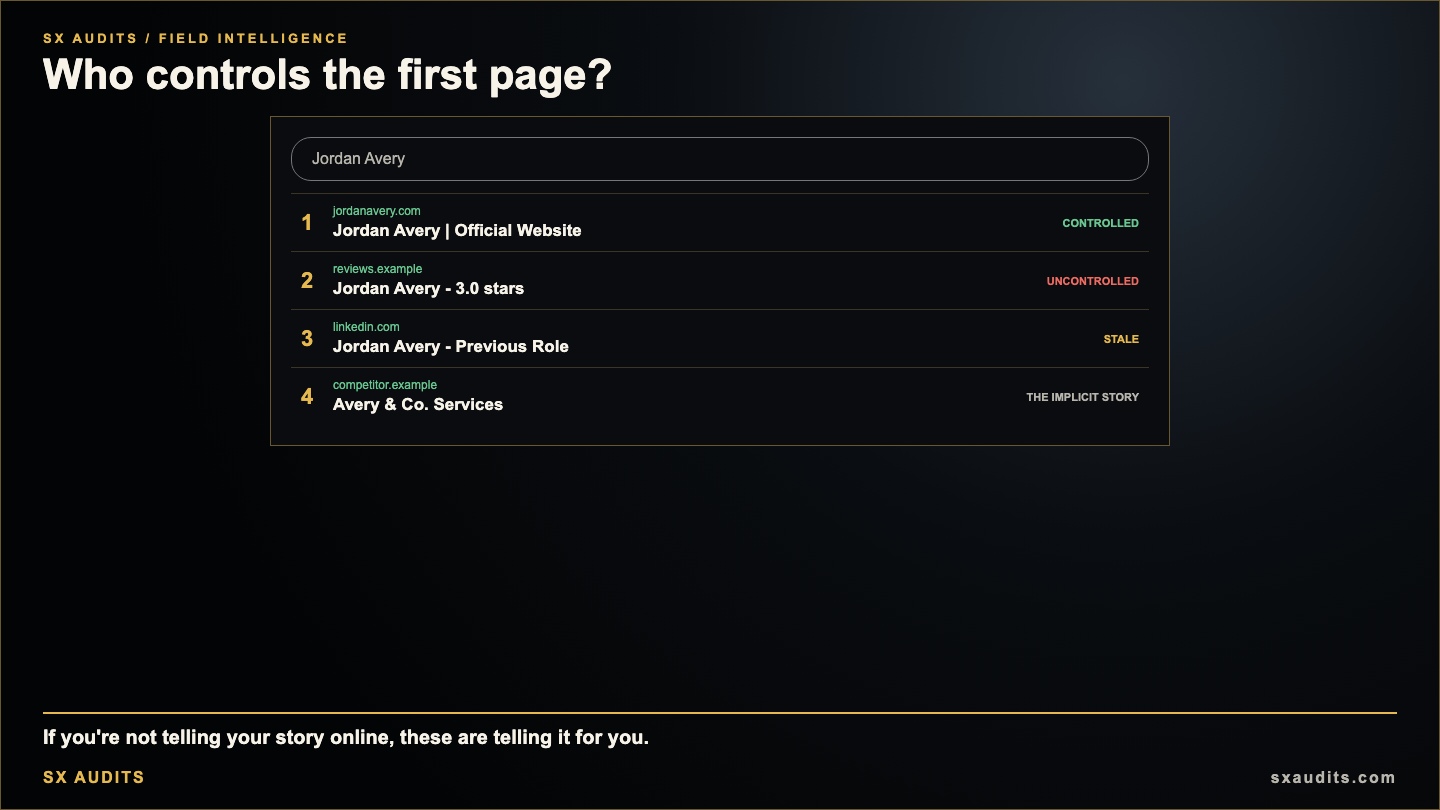
When a prospective client Googled her name, the first result was her Psychology Today listing. The second was a one-star review from 2021 that mischaracterized a situation she remembered differently. The third was a LinkedIn profile she hadn't updated since 2019, listing a job she no longer had.
The narrative being told about her online wasn't wrong, exactly. But it wasn't hers.
Who Tells Your Story If You Don't
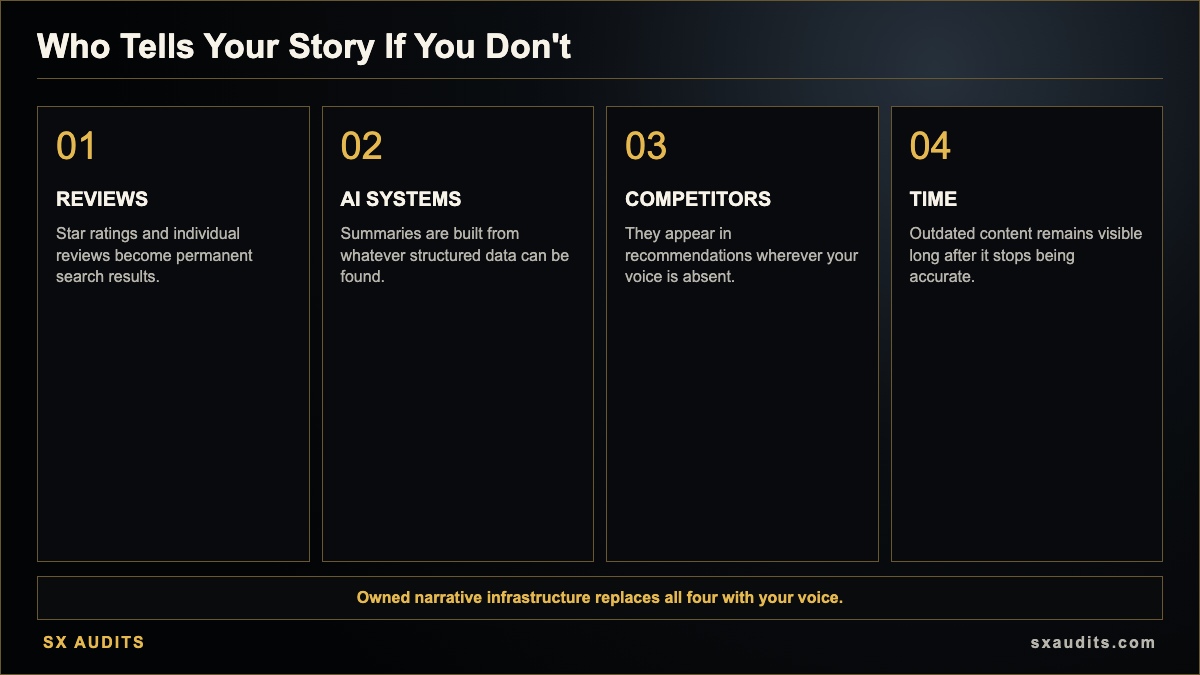
In the absence of owned narrative infrastructure, several forces fill the vacuum:
Review platforms tell the story through aggregate star ratings and individual reviews — some accurate, some not, all public and indexed.
AI systems tell the story by synthesizing whatever structured and unstructured information they can find about your name — often pulling from outdated LinkedIn profiles, incomplete directories, and miscategorized content.
Competitors tell the story implicitly by appearing in the recommendations where you're absent — when someone searches for professionals in your category and you're not in the results, the story is told by who is.
Time tells the story through outdated content — a blog post from 2018, a job title that changed, a photo from before the rebrand — all of which remain indexed and visible to anyone searching for you.
Owning your story online doesn't mean controlling every mention. It means creating the infrastructure for a first-page presence that tells your story before anyone else does.
Your First-page Google Results Are Your Brand
Eighty-eight percent of consumers research professionals online before contacting them. The first page of Google results for your name is not background information — it is the primary first impression for the majority of people considering working with you. A first page controlled by your website, your LinkedIn, your published bylines, and your professional directory listings is a first page that tells your story. A first page controlled by a mix of outdated content, third-party platforms, and unanswered reviews is a story told by absence.
AI Summaries Are Becoming The New First Impression
In 2026, before someone reaches your website, they may ask ChatGPT "tell me about [your name]" or "what should I know about [your profession] in [your specialty]?" AI-generated summaries now influence purchasing decisions for 82% of consumers who encounter them. What the AI says about you is determined by what it can find — and what it can find is determined by what you have built. An unstructured About page, an outdated LinkedIn, and no published articles produce a thin, potentially inaccurate AI summary. A structured bio, schema markup, and citable original content produce an accurate one.
Original Content Is The Highest-leverage Narrative Tool
The most powerful way to own your story online is to produce original content that expresses your perspective — articles, posts, guides, or frameworks that reflect your actual thinking. This content serves multiple functions simultaneously: it provides AI systems with citable material that accurately represents your expertise; it gives Google content to index that you control; it demonstrates current activity (AI systems penalize content staleness, dropping citation rates for pages not updated quarterly); and it creates the primary resource prospective clients find when they research you seriously.
Consistency Across Platforms Is The Foundation
A narrative that says different things about you on different platforms is not a controlled narrative — it is a fragmented one. Your name should appear identically everywhere. Your specialty and role description should be consistent across your website, LinkedIn, professional directories, and published bylines. Your photo should be the same, or clearly recognizable as the same person, across all professional platforms. Consistency is the difference between a coherent entity signal that AI systems can process confidently and a fragmented one they interpret as ambiguous.
Responding To Negative Content Is Part Of Ownership
Owning your story includes deciding how to respond when others tell it inaccurately. A negative review that goes unanswered is a one-sided account. A thoughtful, professional response puts your voice in the conversation. A press mention that mischaracterizes your work can sometimes be corrected. A Wikipedia entry with inaccurate information (for those visible enough to have one) can be flagged. Narrative ownership is not passive — it is an active practice of monitoring what is being said and ensuring your voice is part of it.
What Owned Narrative Infrastructure Looks Like
Owned:
- A current website with your bio, specialty, methodology, and proof of expertise
- A regularly updated blog or article archive with original thinking
- A LinkedIn profile that is current, specific, and consistent with your website
- Person schema markup on your website declaring your professional identity
- Three or more published bylines, press mentions, or third-party references that confirm your expertise
Monitored:
- Your first-page Google results (search your name in incognito monthly)
- Review platforms in your industry
- AI platform descriptions (run the personal brand audit quarterly)
Want to know exactly where your business stands with AI search?
We run the full diagnostic and deliver a findings report in 72 hours. No discovery call. No commitment.
Book the Audit →Related intelligence · selected for this topic
Framework developer and systems thinker specializing in AI implementation and decision architecture. Creator of the AI Council methodology — a structured multi-model framework used to surface deeper insights in complex decisions. The audit intelligence at Sovereign X Audits is built on these same principles.
aicouncilconductor.com →Find out exactly where your business stands.
We audit your digital infrastructure, AI visibility, and brand presence — and show you exactly what it's costing you.