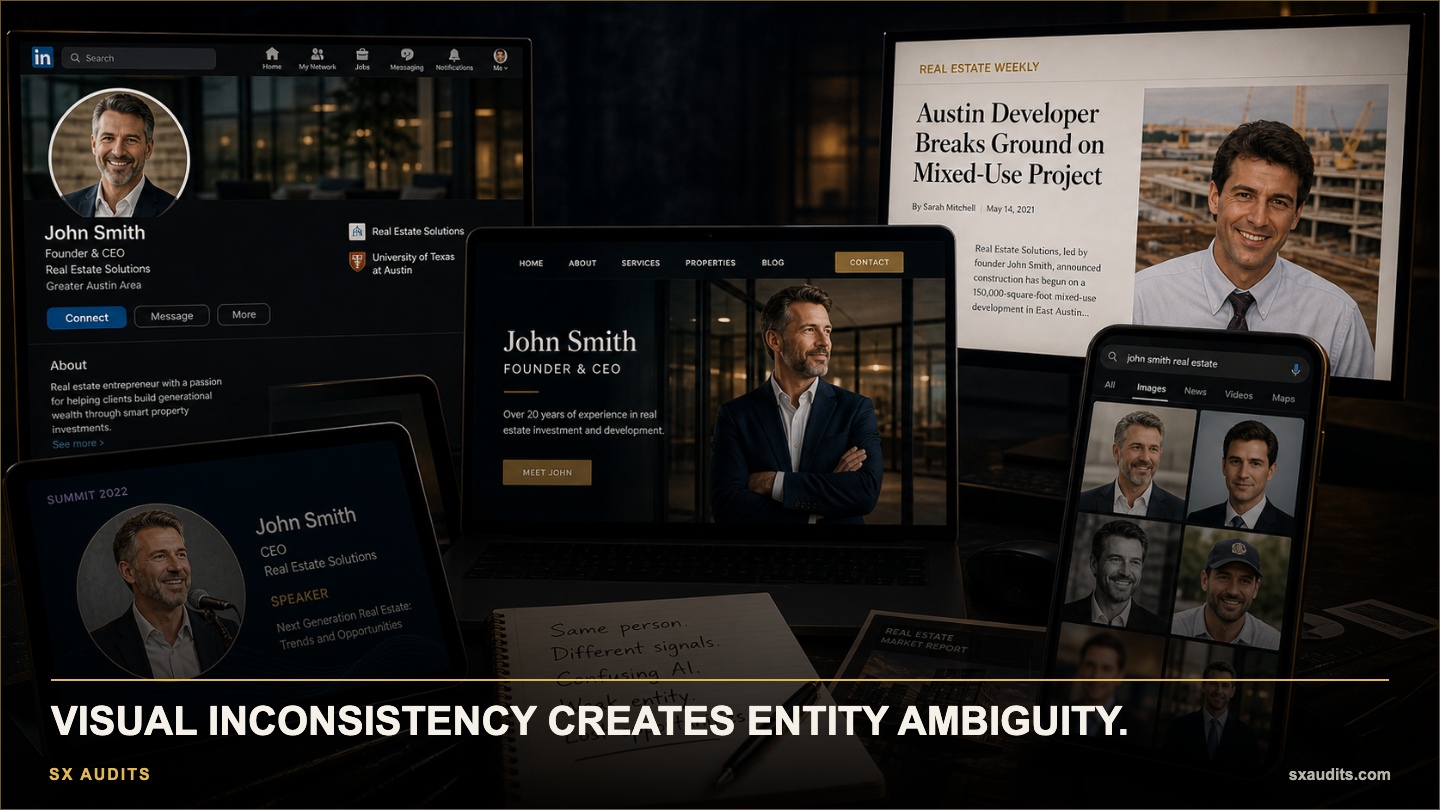
Image Consultant in the Age of AI: Why Your Visual Identity Is Now Machine-Read
The first thing a potential client does when they receive your name is search it. The first thing they see, before they read a word, is an image.
For most professionals, that image is a LinkedIn profile photo taken three years ago in mediocre lighting. It communicates something — just not what they intend.
For image consultants, this has always been the core argument: visual presentation shapes first impressions and those impressions are largely unconscious and extraordinarily fast. What's new in 2026 is that the audience processing those images is no longer only human.
The Machine-Read Visual
AI systems are now actively processing visual identity in multiple ways relevant to image consultants and their clients.
Social platforms use computer vision to categorize content and suggest it to audiences — professional-looking photos of individuals in business contexts reach different audiences than casual ones. LinkedIn's algorithm weights profile photo quality as part of content recommendation scoring. Google's systems process images for relevance and entity matching — a professional's photo that appears consistently across their website, LinkedIn, and press coverage becomes a visual entity signal that helps AI systems build confidence about who that person is.
AI-generated summaries increasingly pull from LinkedIn profile descriptions, About page content, and press photos when synthesizing information about professionals. The visual and written layers of personal brand are now processed together — and the mismatch between a professional's stated expertise and their visual presentation creates conflicting signals that machine systems register.
Visual Consistency Is An AI Entity Signal
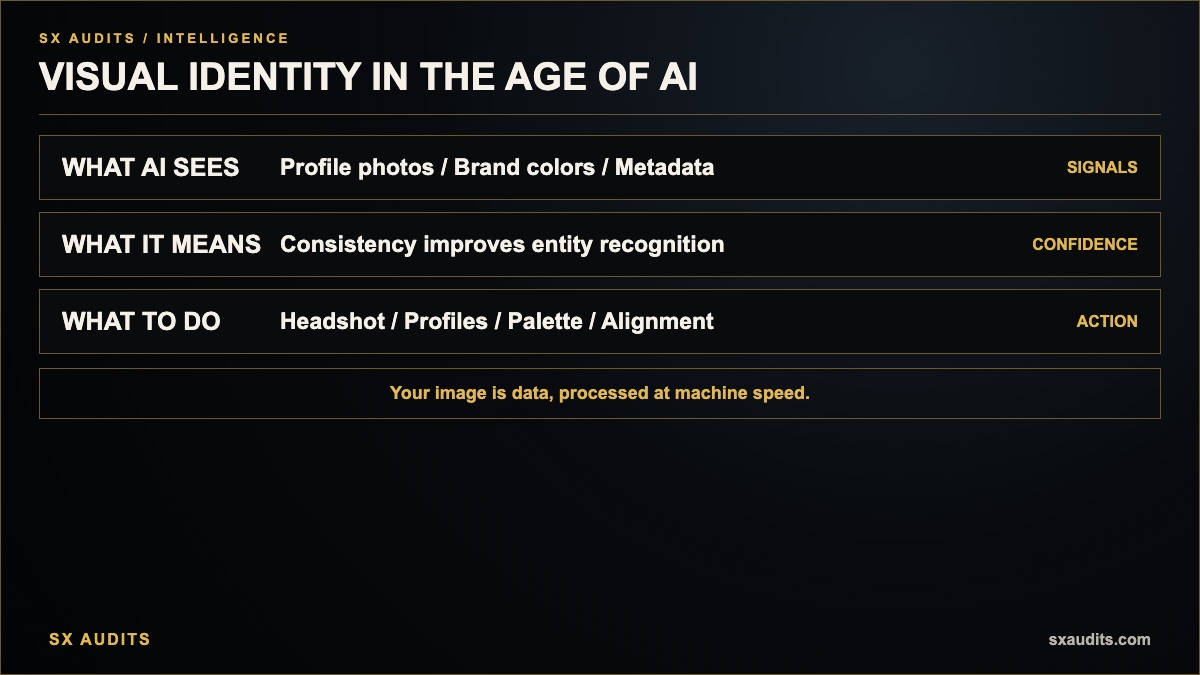
The same photo appearing consistently across your website, LinkedIn, press coverage, and professional directories is a form of entity validation. AI systems build confidence about individuals through consistent signals — and visual consistency (same professional photo, same color palette in brand materials) contributes to entity recognition. An image consultant's own visual presentation — and that of their clients — is now infrastructure, not just aesthetics.
First Impressions Happen In Less Than A Second — And AI Processes At That Speed
Humans form first impressions in approximately 100 milliseconds — before any conscious evaluation occurs. AI systems processing visual data operate at comparable speed. The professional who presents visually as authoritative, trustworthy, and category-appropriate in their profile photo and brand imagery is activating first-impression signals that influence both human viewers and the AI systems that curate and present their content.
Image Alignment Is The First Layer Of A Machine-readable Personal Brand
A professionally developed personal brand has two layers: the written layer (schema markup, bio content, citable articles) and the visual layer (consistent, on-brand photography and visual identity). Both are processed by AI systems when a prospective client or hiring manager asks about a professional. A polished written brand paired with a misaligned or outdated visual identity creates a credibility gap that registers immediately — both for the human viewer and the AI system summarizing the information.
The Overlap Between Image Consulting And Digital Presence Work Is Growing
The practitioners who are best positioned in 2026 are image consultants who understand that their work extends to the digital brand as well as the physical one. LinkedIn profile photos, professional headshots for website use, color and styling choices that translate effectively to video calls and digital content — these are not separate from traditional image consulting work. They are the same work applied to a digital context that is increasingly where first impressions happen.
Clients In Ai-intensive Industries Have The Highest Urgency
Clients in professional services — law, finance, consulting, executive leadership — are increasingly being researched through AI. When a board considers a candidate, when a client evaluates an advisor, when a hiring committee shortlists an applicant — AI-generated summaries of the individual are increasingly part of that process. The professional whose visual brand is misaligned with their expertise, or whose online photos are inconsistent and outdated, is presenting a version of themselves that may contradict the AI-generated description of their credentials.
For Image Consultants: The 2026 Scope of Work
A complete image consultation for a professional client in 2026 includes:
Traditional scope: Color analysis, wardrobe alignment, grooming and styling guidance, confidence and presence coaching.
Digital extension: Professional headshot brief and photographer preparation, LinkedIn photo guidance, video call background and lighting, color palette consistency across digital brand materials, and a review of how the client's visual brand reads on the platforms where they are most visible.
AI-readiness layer: Assessment of whether the client's About page and online bio is written in language that aligns with the visual brand being built — ensuring that what AI says about them matches what they look like when someone searches their name.
Want to know exactly where your business stands with AI search?
We run the full diagnostic and deliver a findings report in 72 hours. No discovery call. No commitment.
Book the Audit →Related intelligence · selected for this topic
Framework developer and systems thinker specializing in AI implementation and decision architecture. Creator of the AI Council methodology — a structured multi-model framework used to surface deeper insights in complex decisions. The audit intelligence at Sovereign X Audits is built on these same principles.
aicouncilconductor.com →Find out exactly where your business stands.
We audit your digital infrastructure, AI visibility, and brand presence — and show you exactly what it's costing you.